How to Prepare for the ACT (New Format)
The ACT got shorter in 2025, Science became optional, and a lot of the prep advice online is now out of date. Here's what the current test looks like, how many hours a real score jump takes, and a study plan that fits around school.
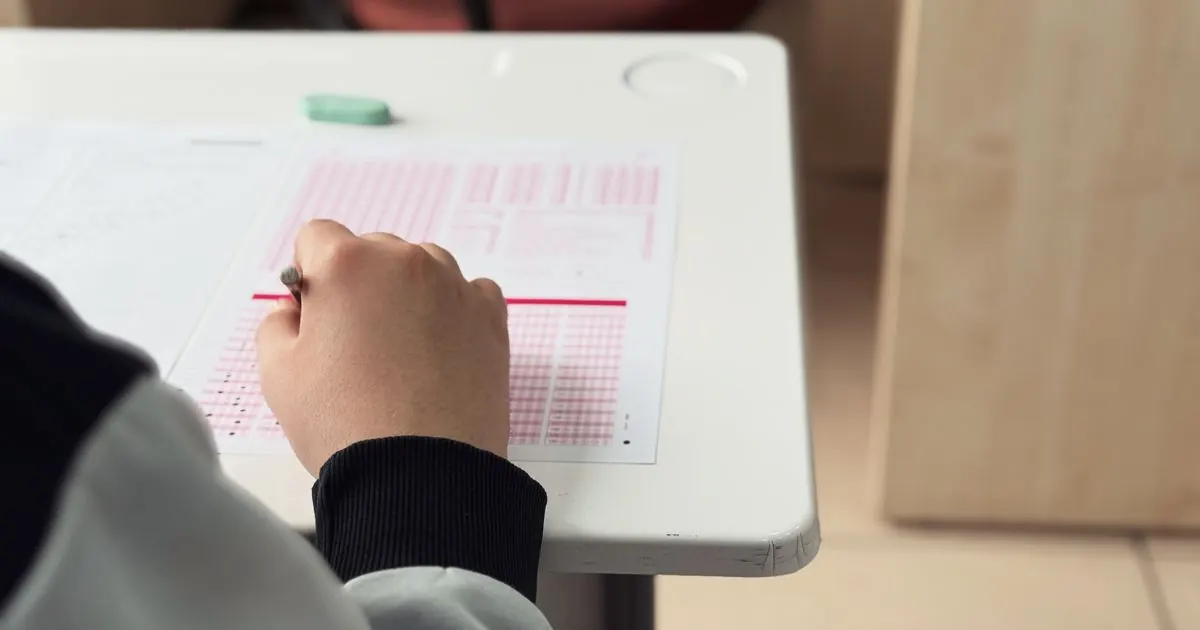
If an older sibling or a prep book told you the ACT is a 215-question sprint, that was true until 2025. The current version, which ACT calls the enhanced ACT, has fewer questions, more time for each one, and a Composite score built only from English, Math and Reading. The content hasn't changed much. The way you should prepare has.
Start with an official practice test in the new format, set a target from your colleges' score ranges, and decide early whether you need the optional Science section. Most of your points will come from reviewing mistakes, not from doing more questions.
What changed on the ACT
The enhanced ACT arrived on national online tests in April 2025 and on every national test date, paper included, from September 2025. Here's how the sections compare with the old format.
| Section | Now | Before 2025 |
|---|---|---|
| English | 50 questions, 35 min | 75 questions, 45 min |
| Math | 45 questions, 50 min | 60 questions, 60 min |
| Reading | 36 questions, 40 min | 40 questions, 35 min |
| Science | Optional: 40 questions, 40 min | Required: 40 questions, 35 min |
| Writing | Optional essay, 40 min | Optional essay, 40 min |
A few things follow from that table:
- Your Composite is now the average of English, Math and Reading on the usual 1–36 scale. If you take Science, it's reported separately and combined with Math into a STEM score.
- The core test takes about two hours and five minutes. Adding Science brings it to about two hours 45, which is still 10 minutes shorter than the old four-section test, with 44 fewer questions.
- You get more time per question. English went from 36 to 42 seconds a question, Reading from about 53 to about 67, Math from 60 to about 67, and Science from about 53 to 60. The ACT is still quick, but it's no longer the scramble it used to be.
- Math questions have four answer choices instead of five.
- Some questions are unscored field-test items, mixed in with the real ones, and you can't tell which is which. Treat every question as if it counts.
- Superscores still work. ACT combines your best English, Math and Reading scores from different test dates, including tests you took in the old format.
Should you take ACT Science or Writing?
Science no longer affects your Composite, so the only question is whether the places you're applying to want it. Take it if a college, program or scholarship asks for Science or uses the STEM score. If none of them do, skipping it saves 40 minutes and a lot of energy on test day. Colleges decide this individually, so check each one's testing page, and email admissions if the policy isn't clear.
If you do take Science, know that it's mostly about reading graphs, tables and experiment descriptions quickly. A few questions need basic science knowledge, but you don't need to memorise a textbook.
Writing is a 40-minute essay. Few colleges require it now, so the same rule applies: check your list before you spend time on it.
How long should you study for the ACT?
It depends on the gap between your first practice score and your target, and gains get harder near the top. Going from 22 to 25 is usually quicker than going from 30 to 33. These ranges are our planning estimates, not official ACT figures:
| Goal | Focused hours | Timeline |
|---|---|---|
| +1–2 points (mostly getting used to the format) | 10–20 | 2–4 weeks |
| +3–4 points | 40–60 | 6–10 weeks |
| +5–6 points | 80–120 | 3–4 months |
| +7 points or more | 150+ | 4–6 months |
To set a target, look up the middle 50% ACT range for each college on your list. Scoring at or above the top of that range turns your score into a strength rather than something admissions has to look past. Our guide to how many hours to study for the ACT breaks this down by points, week and section.
Step 1: take an official practice test in the new format
ACT offers two full-length online practice tests for the enhanced ACT, in timed and untimed versions, plus a paper practice test in its free Preparing for the ACT Test guide. Take one under real timing, ideally on a weekend morning, because national test days start early. Score it and write down each section score. That's your baseline.
Older practice tests are still useful for practising questions, because the content is close. Just don't copy their timing. An old English section has 75 questions, and at the new pace of 42 seconds a question that's about 52 minutes, not 45. Or do 50 of the questions in 35 minutes and stop there.
Where the points are, section by section
English: usually the fastest points on the test
Most tutors will tell you English is where scores rise fastest. It tests a fairly short list of grammar and punctuation rules, plus some questions about writing choices, so the same lessons keep paying off.
- Learn the core rules: commas, semicolons and colons, apostrophes, subject-verb agreement, pronoun clarity, verb tense and misplaced modifiers.
- Prefer the shortest answer that's grammatically correct and keeps the meaning. The ACT rewards concise writing, and wordy options are wrong more often than not.
- Don't avoid "NO CHANGE". It's the right answer often enough that treating it as a trap costs points.
- For "does this sentence belong here?" questions, read the whole paragraph and ask what it's about. Relevance matters more than how interesting the sentence sounds.
- Write down the rule behind every mistake. After a few weeks you'll notice the same three or four rules causing most of your misses.
Math: know your formulas cold
- There's no formula sheet. Unlike the SAT, the ACT doesn't give you formulas, so memorise area and volume, the Pythagorean theorem and special right triangles, slope and distance, the quadratic formula and SOH-CAH-TOA.
- Use a calculator you already know well. Calculators are allowed on the whole Math section, but some models are banned, including ones with a computer algebra system. Check ACT's calculator policy well before test day.
- Bank time early. Questions generally get harder as you go, so move quickly and carefully through the first half and keep time for the hardest ones at the end.
- Drill your weak topics, not your favourite ones. Your practice test tells you exactly which they are. Maybe it's functions, maybe probability, maybe word problems about rates and percentages.
- Never leave a blank. There's no penalty for wrong answers, so guess on anything you can't finish.
Reading: the answer is always in the text
- Every correct answer is supported by the passage. If you can't point to the line that proves it, it's probably wrong, even if it sounds reasonable.
- Read for structure first. Know what each paragraph is doing before you get lost in the details. Detail questions go faster when you already know where to look.
- Find your passage order. Passages come from literature, social science, humanities and natural science. Some students start with their strongest type. Try it on practice tests before you commit to it.
- Spend the extra time checking, not rereading. You now have about 67 seconds a question. Use them to confirm your answer against the text rather than reading the passage twice.
Science, if you're taking it: read the question first
- Go to the question, then to the figure or table it points to. Reading every passage in full wastes time.
- Watch the axes, units and labels. A lot of wrong answers come from reading the wrong line on a graph.
- For passages that compare two scientists' or students' explanations, jot a few words summarising each view before you answer.
Writing, if you're taking it
You write one essay in 40 minutes. Spend the first five or so planning: take a clear position, pick two or three reasons, and note an example for each. A well-organised essay with a clear argument does better than a longer one that wanders.
A 10-week ACT study plan
This plan assumes about 5 to 7 hours a week around school, aiming for a 3 to 4 point gain. If you need more than that, start earlier rather than cramming extra hours into each week.
| Week | What to do |
|---|---|
| 1 | An official practice test under real timing. Set your target from your colleges' ranges, and decide on Science and Writing. |
| 2–3 | English rules twice a week, your weakest Math topics twice a week, and one timed Reading set. Start the error log. |
| 4–5 | Timed section practice. Review every miss and add it to the log. Build and memorise your formula list. |
| 6 | A second full practice test. Compare it with week 1 and move hours toward your weakest section. |
| 7–8 | Mixed timed sets and pacing drills, plus Science practice if you're taking it. |
| 9 | A third full test in test-day conditions: same start time, same breaks, same calculator. |
| 10 | Light review of your error log, early nights, and logistics: admission ticket, photo ID and an approved calculator. |
Plan on two test dates. Because of superscoring, a second attempt after a few more weeks of focused work often lifts your Composite, and knowing you have a second chance takes a lot of pressure off the first.
Track your ACT prep by section
Log focused hours for English, Math and Reading separately, keep a streak going through the school term, and check topics off in our free ACT syllabus tracker.
Track Your ACT Hours Free →Mistakes that waste ACT prep time
- Practising old tests at the old pace. You end up training a rushed rhythm you don't need anymore.
- Taking practice tests without reviewing them. Plan an hour or two of review for every full test.
- Studying Science for weeks when none of your colleges want it.
- Leaving answers blank. A guess can only help you.
- Practising with formulas in front of you. You won't have them on test day, so practise without them.
- Waiting until the fall of senior year to take the first test. It leaves no room for a second attempt.
ACT or SAT?
US colleges accept both, so pick the one that suits you. The SAT is digital and adaptive, gives you a formula reference sheet, and has a graphing calculator built into the testing app. The ACT now has a calmer pace than before, no formula sheet and an optional Science section. If you can't decide, take one official practice test of each and compare your percentiles. If the SAT wins, our guide to how many hours to study for the SAT covers planning by score gap.
Keep your prep honest
Ten weeks sounds like plenty until school, sport and everything else start eating into it. The students who improve most aren't always the ones who study longest. They're the ones who notice early when a week slips and fix it the next week.
Start a timer when you begin real practice and stop it when you drift. Tag each session as English, Math or Reading, and at the end of the week you'll know whether your weakest section got its share. That's what Group Study Timer is built for: it logs focused hours by subject, keeps a daily streak, and lets you study with friends who are prepping for the same test date.
Make this week's plan actually happen
A free study timer with subject tracking, streaks and heatmaps. It runs in your browser, so there's nothing to install.
Open the Free Study Timer →Frequently asked questions
How long should I study for the ACT?
Most students need about 40 to 60 focused hours over six to ten weeks to raise their Composite by three or four points. A bump of one or two points can come from two to four weeks of practice in the new format.
Is the new ACT easier?
The content is about the same, but you get more time per question, the test has 44 fewer questions when you take all four multiple-choice sections, and Math questions have four answer choices instead of five. Most students find the pacing easier to manage.
Do I have to take ACT Science?
Only if your colleges or scholarship programs ask for it. Science no longer counts toward your Composite score, but it's reported separately and combined with Math into a STEM score, so check each college's testing policy first.
Can I still use old ACT practice tests?
Yes, for practising questions, because the content hasn't changed much. Adjust the timing, though, since old tests have more questions and less time per question. For full-length practice, use ACT's official tests in the new format.
How many times should I take the ACT?
Plan for two attempts. ACT builds a superscore from your best English, Math and Reading across test dates, and many colleges accept it, so a second try after a few weeks of targeted practice often lifts your Composite.
Take an official practice test in the new format, set a target from your colleges' ranges, and decide early whether you need Science. Put most of your hours into English rules and your weakest Math topics, review every mistake, and track your hours so the plan holds up during the school term.
Sources we checked in September 2026: ACT's enhanced ACT FAQs and ACT information for examinees. Time-per-question figures are our own calculations from ACT's published question counts and section times. Test policies can change, so confirm details on act.org before you register.